
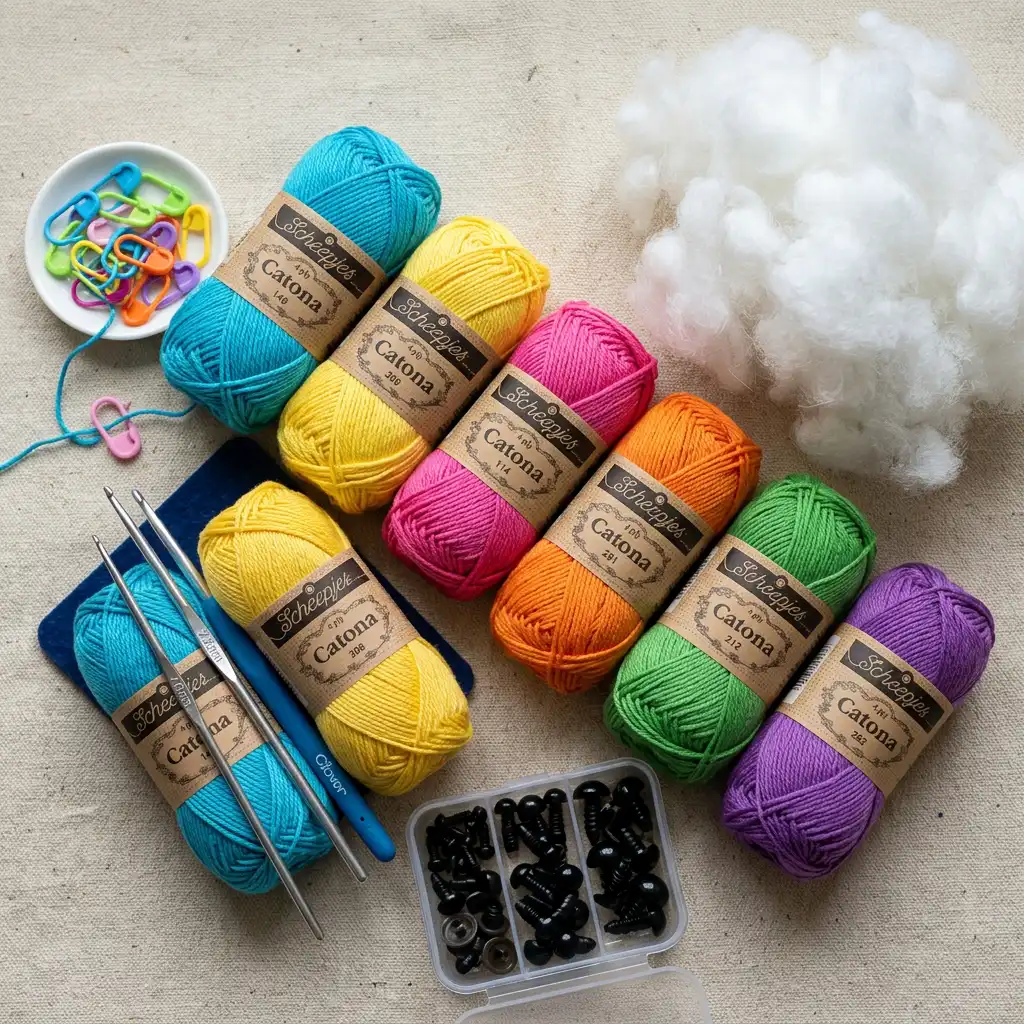
When you transition from crocheting flat projects (like scarves or blankets) to making three-dimensional amigurumi plushies, you will quickly discover that your choice of tools and materials makes a massive difference. The right supplies ensure that your toys look neat, hold their shape, and prevent the white stuffing from showing through.
In this guide, we will break down the essential tools you need to build your amigurumi toolkit and explain how to choose the best yarn for toy-making.
🧶 The Best Yarns for Amigurumi
Not all yarns are created equal when it comes to stuffing toys. Here are the three most popular and effective fibers for amigurumi:
- 1. Mercerized Cotton: This is the absolute gold standard for amigurumi. Mercerized cotton is smooth, tightly spun, and has a slight sheen. It offers incredible stitch definition, doesn’t split or pill, and holds its shape perfectly. Brand recommendation: Scheepjes Catona or Paintbox Yarns Cotton DK.
- 2. Acrylic Yarn: An affordable, widely available, and beginner-friendly option. Acrylic has more stretch than cotton, which makes it easier to work with but also means you have to be extra careful not to over-stuff and stretch your stitches. Brand recommendation: Stylecraft Special DK.
- 3. Chenille / Velvet Yarn: Highly popular for creating oversized, ultra-soft “chubby” plushies. While incredibly cuddly, these plush yarns can be difficult for absolute beginners because it is hard to see your individual stitches. Brand recommendation: Bernat Blanket Baby.
🛠️ Essential Tools for Toy-Making
To successfully assemble and finish your amigurumi characters, you will need a few specialized tools alongside your hook:
- Ergonomic Hook (0.5 mm – 1.5 mm smaller than recommended): Crocheting tightly can cause hand strain. An ergonomic hook is crucial. Remember: always size down your hook! If your yarn label recommends a 4.0 mm hook, use a 2.5 mm or 3.0 mm hook for amigurumi.
- Polyester Fiberfill Stuffing: Premium polyester stuffing (like Poly-Fil) is lightweight, washable, and keeps its bounce.
- Locking Stitch Markers: Since amigurumi is worked in continuous rounds, you must mark the first stitch of every round. Locking markers clip securely onto your stitches so they won’t fall out as you turn your work.
- Bent-Tip Tapestry Needle: A metal needle with a slightly bent tip makes it much easier to scoop under stitches when seaming parts (arms, legs, ears) to the main body.
- Safety Eyes: Plastic eyes that lock in place with a backing washer. Warning: safety eyes are a choking hazard for babies and pets under 3 years old. For baby toys, always embroider the eyes instead!