
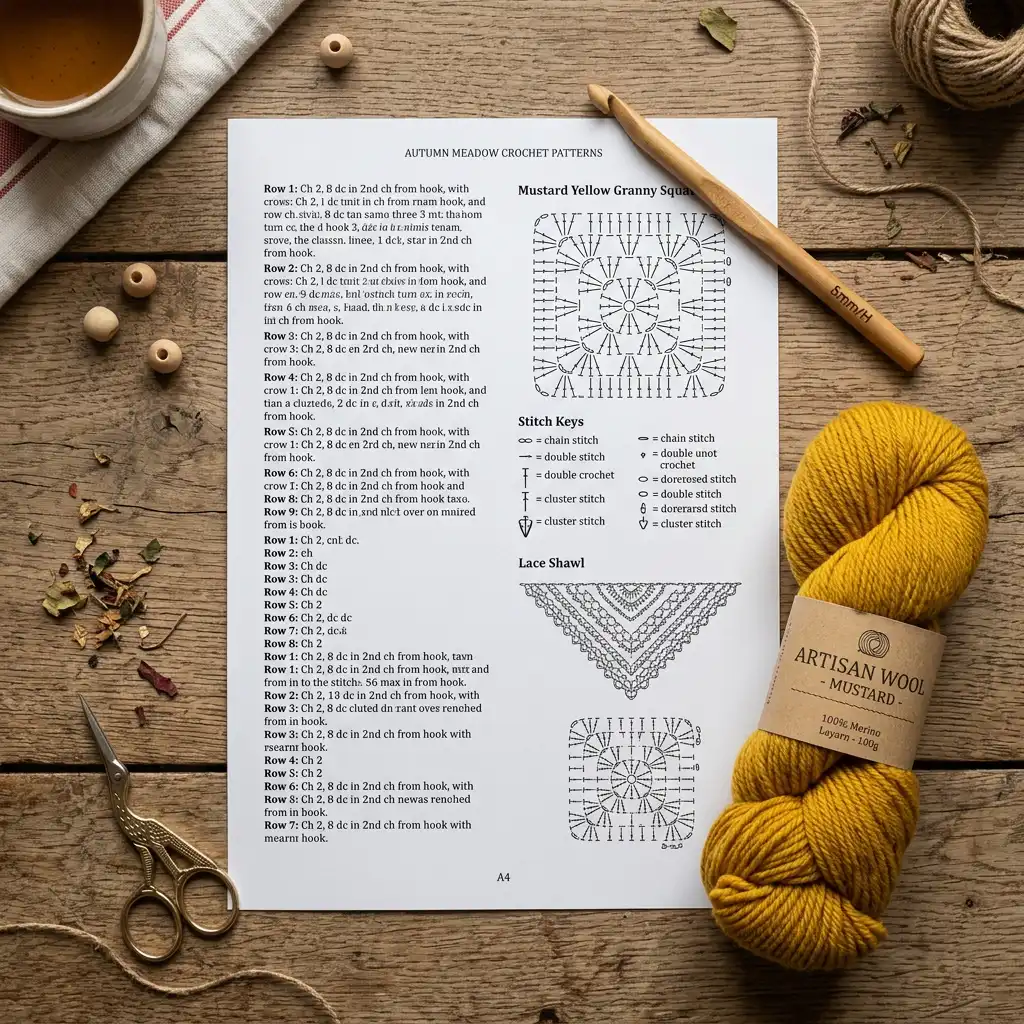
You have learned the basic stitches and selected your supplies. You are excited to start your first project, so you open a crochet pattern—and suddenly, you feel like you are looking at a foreign language or complex computer code! “Ch 15, sc in 2nd ch, *dc, ch 1, sk 1; rep from * to end.” What on earth does that mean?
Don’t panic! Written crochet patterns are simply written in a shorthand code to save space and make them faster to read once you know the lingo. Learning to decode these abbreviations and symbols is a major milestone for any crocheter. In this guide, we will translate the most common shorthand and teach you how to read crochet patterns like a pro.
📖 Common Crochet Abbreviations (US Terms)
Crochet patterns in the United States use a standard set of abbreviations. Here are the most common ones you need to memorize:
- ch: Chain stitch
- sc: Single crochet
- hdc: Half double crochet
- dc: Double crochet
- sl st: Slip stitch
- st(s): Stitch(es)
- sp(s): Space(s)
- yo: Yarn over
- rep: Repeat
- sk: Skip
🇺🇸 US vs. 🇬🇧 UK Crochet Terms: The Crucial Difference
One of the most common mistakes beginners make is using the wrong terminology. Crochet patterns are written in either **US Terms** or **UK Terms**. The same stitch name refers to two completely different heights depending on the system!
For example, a US “single crochet” is called a UK “double crochet.” A US “double crochet” is called a UK “treble crochet.” Before you start any pattern, always check whether it is written in US or UK terms, otherwise your project will turn out completely wrong!
🔁 Reading Repeats: Parentheses, Brackets, and Asterisks
Crochet patterns often require you to repeat a sequence of stitches multiple times. Designers use symbols to group these instructions:
- Asterisks (*): Directs you to repeat the instructions after the asterisk. For example: “*sc in next st, 2 sc in next st; rep from * 5 times” means you repeat the “sc, 2 sc” sequence a total of 5 times.
- Parentheses ( ): Used to indicate a group of stitches that should all be worked into the same stitch or space. For example: “(3 dc, ch 1, 3 dc) in corner space.”
- Brackets [ ]: Often used for stitch counts at the end of a row, showing you how many stitches you should have when you finish. For example: “[24 sts]” at the end of a row.