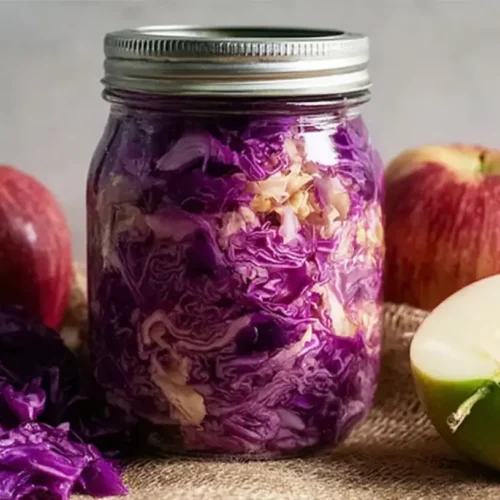
Gingery Apple Cabbage Sauerkraut
This zesty sauerkraut combines the crispness of cabbage and apple with a warm ginger kick, perfect for enhancing any meal.
Equipment
- Large mixing bowl
- Sharp knife
- Cutting board
- Grater
- Wide-mouth quart-sized Mason jars (2) or half-gallon jar (1)
- Fermentation weights
- Muddler (optional)
Ingredients
Main Ingredients
- 1 medium-sized green cabbage (about 2-3 lbs)
- 1 large Granny Smith or other firm, tart apple
- 2-3 inches fresh ginger peeled
- 2 tablespoons non-iodized salt
Optional
- 1 teaspoon caraway seeds
- 1 pinch red pepper flakes
Instructions
Preparation
- Remove outer leaves from cabbage, quarter it, remove the core, and thinly slice. Peel, core, and thinly slice or grate the apple, then add both to a large mixing bowl.
- Peel and grate the fresh ginger directly into the bowl with the cabbage and apple.
- Sprinkle salt and optional seasonings over the mixture, then massage vigorously for 5-10 minutes until the cabbage softens and releases a good amount of liquid.
Fermentation
- Pack the mixture tightly into clean Mason jars, pressing down to remove air pockets and ensure the cabbage is fully submerged under its own liquid.
- Continue packing until the cabbage is 1-2 inches below the rim, then pour any remaining brine over the cabbage to ensure all solids are covered.
- Place a fermentation weight or a smaller jar filled with water on top of the cabbage to keep it submerged.
- Loosely screw on jar lids or use airlock lids, then place the jars in a cool, dark spot (60-75°F / 15-24°C) for 2 to 4 weeks.
- Monitor daily for bubbles and skim off any scum or mold, ensuring the cabbage remains under the brine.
- After 2 weeks, taste the sauerkraut and once desired sourness is reached, remove weights, tighten lids, and refrigerate to slow fermentation.
Notes
Keep a close eye on the brine level during fermentation; if it drops, you can add a simple brine solution (1 tsp salt per cup of water) to keep everything submerged. The ideal fermentation time can vary based on temperature and personal preference for tanginess.